
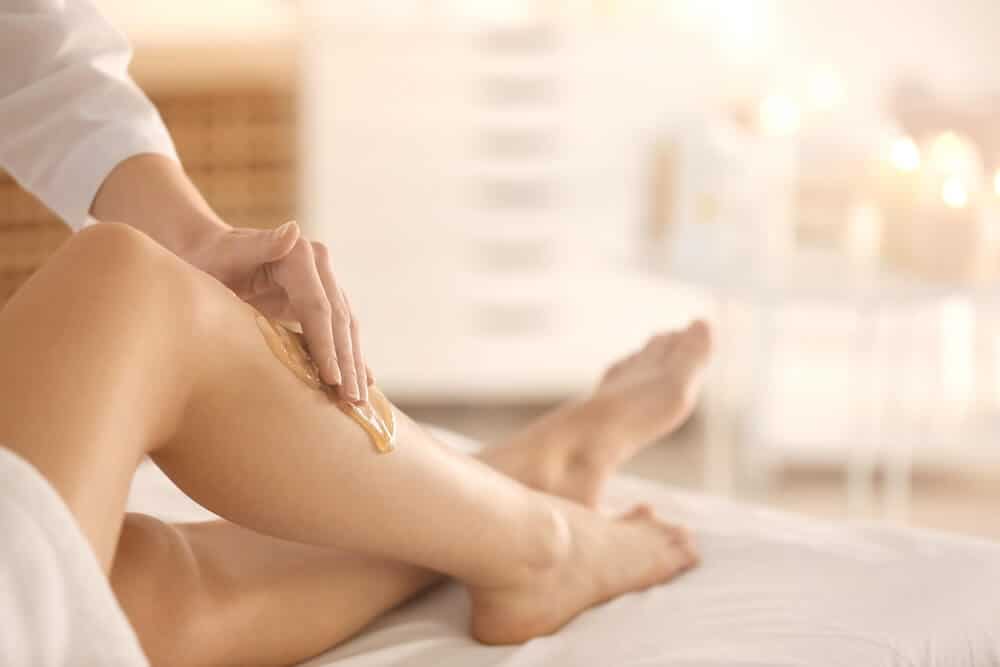
Sugaring and waxing are cousins, not twins. Both remove hair from the root, both keep skin smooth for weeks rather than days, and both have devoted fans who insist theirs is the gentler art. The real differences come down to what is in the pot, which direction the hair leaves your body, and how each method treats the skin around the hair. Here is a clear, even-handed comparison so you know exactly what you are choosing.
What Each Method Is Made Of
Sugaring paste is startlingly simple: sugar, lemon juice, and water, cooked to a thick, honey-like consistency. It is applied at body temperature or barely warmer, and it is water soluble, so any residue rinses away with warm water. The simplicity is the appeal, especially for people who react to additives.
Wax formulas vary more widely, from soft waxes removed with cloth strips to hard waxes that set and lift away on their own, and quality varies with them, which is one reason the professional applying it matters as much as the product. Wax is applied warm, grips hair firmly, and excels at clearing large areas quickly and cleanly.
The two also come from different eras. Sugaring is genuinely ancient, with roots in Middle Eastern and North African beauty traditions going back centuries, passed down as a homemade craft long before it reached modern studios. Professional waxing is the younger, more standardized discipline, refined in salons and spas into the licensed, regulated service it is today. Neither pedigree makes one better, but it explains their personalities: sugaring carries an artisanal, minimalist identity, while waxing carries a professional infrastructure behind it.
The Direction Trick That Defines Sugaring
Here is the genuinely interesting mechanical difference. Waxing applies product in the direction of hair growth and removes it against the growth, which gives it a powerful grip. Sugaring does the reverse: the paste is worked against the growth and flicked off in the direction the hair grows. Removing hair along its natural direction puts less stress on the follicle, which is why sugaring advocates describe it as the gentler pull, particularly for fine or fragile hair.
The trade is grip. Wax holds coarse, stubborn hair more aggressively, which is exactly what you want on dense growth and large areas, and why waxing remains the professional standard for everything from full legs to Brazilians. Sugaring can also work on slightly shorter hair, closer to an eighth of an inch, though a quarter inch remains the reliable target for both methods.
Comfort, Cleanup, and Skin Sensitivity
Neither method is painless, and anyone promising otherwise is selling something. Both involve pulling hair from the root, and both get noticeably easier with regular appointments as hair returns finer. Sugaring's advocates point to the room-temperature paste and its tendency to adhere mostly to hair rather than live skin. Waxing's advocates point to speed: firmer grip means fewer passes over the same spot, and fewer passes is its own kind of gentleness. Cleanup favors sugar, which rinses with water, while wax residue is removed with oil-based cleansers, something your esthetician handles before you ever leave the table.
Results: Where the Two Methods Agree
Zoom out and the outcomes converge. Both methods deliver two to four weeks of smoothness, both produce soft, tapered regrowth instead of stubble, both reward a steady three to four week schedule with finer, sparser hair over time, and both demand the same aftercare: gentle exfoliation starting 48 hours later and daily moisturizer to keep ingrowns away. The choice between them is a preference about the journey, because the destination is the same. At Greentoes, our licensed estheticians deliver that result through professional waxing services covering everything from brows to full legs, with technique refined appointment after appointment.
Common Questions About Sugaring and Waxing
Is sugaring less painful than waxing?
Many people find the pull of sugaring slightly milder because hair leaves in its growth direction, but slightly is the honest word. Both methods remove hair at the root, both sting briefly, and both become dramatically easier with regular appointments. Individual pain tolerance outweighs the method difference.
Does one method cause fewer ingrown hairs?
Ingrown hairs are governed far more by aftercare than by method. Whichever you choose, gentle exfoliation a few times weekly starting 48 hours after your appointment, daily moisturizer, and loose clothing on freshly treated areas will do more for you than the sugar versus wax decision ever will.
Can I switch between sugaring and waxing?
Yes, without any reset or penalty. Both remove hair from the root, so your regrowth cycle and your three to four week rhythm carry straight over. Just keep the quarter inch length rule and tell your practitioner what your skin has been used to.
Choosing Between Sugaring and Waxing
Pick sugaring if minimal ingredients and the gentler-direction pull appeal to you and you have a skilled practitioner nearby. Pick waxing for its grip on coarse hair, its speed across large areas, and the deep bench of professional expertise behind it. Either way, insist on a licensed esthetician, honor the length rule, and keep the schedule. If waxing is your pick, you can book your appointment online at either Greentoes location and let a professional show you how comfortable root-level hair removal can be.