
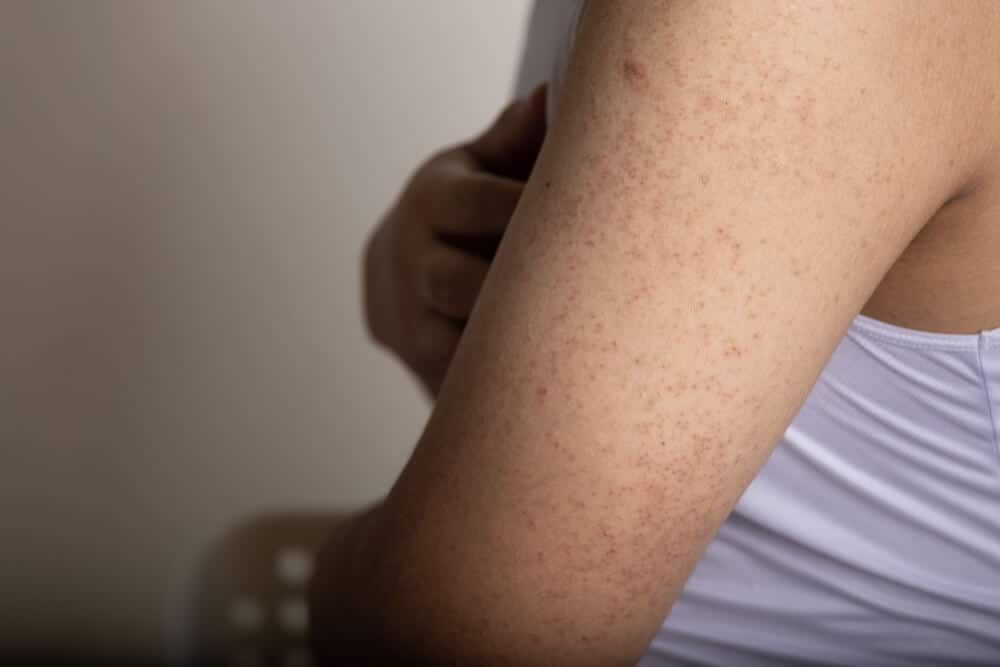
If the backs of your upper arms are covered in tiny rough bumps that never quite go away, you are looking at keratosis pilaris, usually shortened to KP and nicknamed strawberry skin or chicken skin. First, the reassuring part: KP is completely harmless, remarkably common, and not a sign of anything wrong with your hygiene or your health. Second, the practical part: while there is no cure, the right combination of gentle exfoliation and serious moisture can smooth its appearance dramatically. Here is what is actually happening in your skin and what genuinely helps.
What Keratosis Pilaris Actually Is
Every hair on your body grows from a follicle, and your skin naturally produces a protein called keratin. In KP, extra keratin builds up and plugs the openings of hair follicles, creating those small, rough bumps, sometimes with a little redness around each one. The most common real estate is the backs of the upper arms, the fronts of the thighs, and sometimes the cheeks, especially in younger people.
KP runs in families and is driven by genetics, not by anything you did. It often appears in childhood or the teenage years, tends to flare when skin is dry, and dermatologists note that for many people it clears gradually over the years. It is not contagious, not dangerous, and not acne. It is simply a texture, and texture can be managed.
Is It KP or Body Acne?
The two get confused constantly, and the difference matters because the treatments differ. KP bumps are small, uniform, dry, and rough, like permanent goosebumps sanded from the same mold, and they sit in predictable zones like the upper arms and thighs. Body acne is varied: some spots are red and inflamed, some come to a head, they appear and resolve individually, and they favor oilier territory like the back, chest, and shoulders. KP is a keratin traffic jam, not a bacterial breakout, which is why picking at the bumps accomplishes nothing except irritation, and why acne treatments alone rarely touch it.
Why Scrubbing Harder Makes It Worse
The most common KP mistake is understandable: the bumps feel rough, so people attack them with the roughest scrub they own. It backfires. Aggressive scrubbing irritates the follicles, deepens the redness, and can make the condition look worse, which is why dermatologists specifically warn against it. KP responds to patience, not force.
What works is a gentle two-part formula: soft, consistent exfoliation to thin the keratin plugs gradually, and rich daily moisture to keep skin supple so new plugs form more slowly. On the exfoliation side, the American Academy of Dermatology points to keratolytics, gentle chemical exfoliants in lotion form, with ingredients like lactic acid, salicylic acid, urea, or glycolic acid, used carefully and paired with moisturizer afterward. In fact, a 2024 survey of dermatologists published in the Journal of the American Academy of Dermatology found topical lactic acid to be their most-used first-line KP treatment. Light physical exfoliation, like a fine sugar scrub or soft cloth used gently, plays the supporting role. The starring role belongs to daily moisture.
"KP is one of my favorite things to talk clients through, because so many of them have spent years scrubbing at it and feeling frustrated. The moment they switch from force to gentleness, their skin finally gets what it was asking for. It is a mindset change as much as a routine change."
Victor Thompson, Owner, Greentoes
A Simple Weekly Routine for KP-Prone Skin
Keep showers lukewarm and reasonably short, since hot water strips the moisture KP-prone skin is already short on. Two to three times a week, exfoliate the bumpy areas gently, either with a fine-grain sugar scrub or soft mitt using light circular motions, or with a keratolytic lotion containing one of the ingredients above, following its directions exactly. Every single day, bumps or no bumps, moisturize those areas within a few minutes of toweling off, while skin is still damp enough to seal the moisture in.
Then give it time and keep going. Visible improvement typically builds over several weeks of consistency, and the routine is a maintenance plan rather than a one-time fix: in that same 2024 dermatologist survey, more than 60 percent reported KP returning within three months once patients stopped treating it. The skin that stays smooth is the skin that keeps the habit, with winter and dry climates calling for extra moisturizer rather than extra scrubbing.
How Professional Treatments Help
A professional body scrub treatment gives KP-prone skin the physical half of that formula executed perfectly: our sugar scrub is gentle by design, applied with even, trained pressure, removed with warm towels, and finished with layered moisture your skin absorbs immediately. Regular treatments every four to six weeks keep keratin buildup from getting ahead of you, and your esthetician can adjust pressure around any areas having a sensitive week. Between visits, gentle organic skincare products carry the daily moisture half of the job.
One honest boundary: a spa is the maintenance layer, not the medical one. If your KP is severely inflamed or itchy, if it is spreading to new areas, if home care has changed nothing after a couple of months, or if you are not certain the bumps are KP at all, a board-certified dermatologist is the right next stop. Prescription options exist for stubborn cases, and spa treatments then keep the results going.
"We are always straight with clients about what a spa treatment can and cannot do. For KP, what we can do is real: consistent gentle exfoliation, deep moisture, and skin that looks and feels noticeably smoother. For the rare severe case, we are the first to say bring a dermatologist onto the team."
Victor Thompson, Owner, Greentoes
Common Questions About Keratosis Pilaris
Will keratosis pilaris ever go away completely?
For many people, KP softens with age, though dermatologists describe the clearing as gradual, often over many years. Until then it is a manageable condition rather than a curable one, and a consistent routine can keep skin smooth enough that the question stops mattering much.
Does diet affect KP?
No specific food has been shown to cause or cure keratosis pilaris, since the driver is genetic keratin production. General skin health basics like hydration still help the overall picture, but the routine that matters happens in the shower and the moisturizer bottle.
Can I get a body scrub if my KP is flared up?
Usually yes, as long as the skin is not broken or severely inflamed. Tell your esthetician about your KP during your consultation so they can lighten pressure over those areas and focus the treatment on softening rather than scrubbing.
Smoother Skin With KP Is a Routine, Not a Battle
Gentle exfoliation a few times a week, a proven keratolytic if you want the dermatologist-backed boost, moisture every day, lukewarm showers, and a professional scrub on a monthly rhythm to keep everything on track. That is the entire playbook, and it works because it cooperates with your skin instead of fighting it. If you would like the routine started for you by hands that do this every day, book a Body Polish Exfoliating Glow at Greentoes and feel the difference one gentle treatment makes.